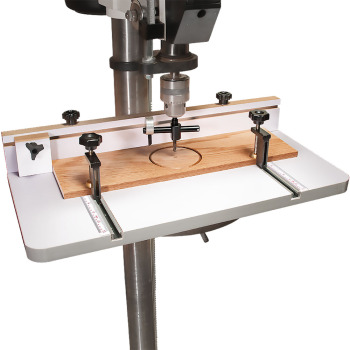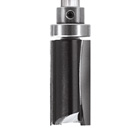







These forstner bits are made of high quality carbon steel and cut clean-sided, flat bottom holes. Great for drilling into in wood or wood composite material. Sizes 1" and larger feature a saw tooth multi-spur design that keeps the cutting edge cool and eliminates burning. Bits are 3-5/8" long and have 3/8" diameter heat treated shanks for use with drill presses or hand drills. Sizes greater than 2-1/8" have 1/2" shanks. NOTE: Case colors may vary.
There are currently no customer reviews for this product. If you have used this product before, please click here and tell everyone about it.
Write your own review
Forstner Bit Speeds - Hard Woods | Bit Diameter | Top Speed (RPM) | | 1-1/2" to 3"+ | 450 | | 1-1/16" to 1-7/16" | 900 | | 11/16" to 1" | 1400 | | 1/4" to 5/8" | 1800 | Forstner Bit Speeds - Soft Woods | Bit Diameter | Top Speed (RPM) | | 1-1/2" to 3"+ | 600 | | 1-1/16" to 1-7/16" | 1200 | | 11/16" to 1" | 1800 | | 1/4" to 5/8" | 2400 | Forstner Bit Maintenance Do not run your bits too fast, causing them to overheat. If your bit gets hot enough, the temper (hardness) can be removed from the bit. A blued bit is ruined. Forstner Bits are made for nice, clean, precise holes and have limited uses in hand-drills. Ideally, these bits should be used in a drill press. The best way to keep your Forstner Bits clean and in good operating order is accomplished by a good drilling technique. As you bore into a piece or material, pull the bit back up to the top rim of the hole to evacuate the chips. Forstner bits do not have flutes on them to remove the chips so it is necessary to do this approximately every 20 seconds of drill time. Sharpening Suggestions Most Forstner Bits come read to use but honing the chipper will improve their cutting action and longevity. Hone only the flat portion of the chipper using a diamond hone or an Arkansas or Japanese stone. Start by using a 1000 Grit and working your way up to a 4000 Grit. The rim of the bit can be sharpened using a round stone or diamond hone. Remember not to change original cutting angle on your bit and keep the chippers slightly lower than the rim so that the rim cuts the edges of any fibers before the chippers remove any material.
|